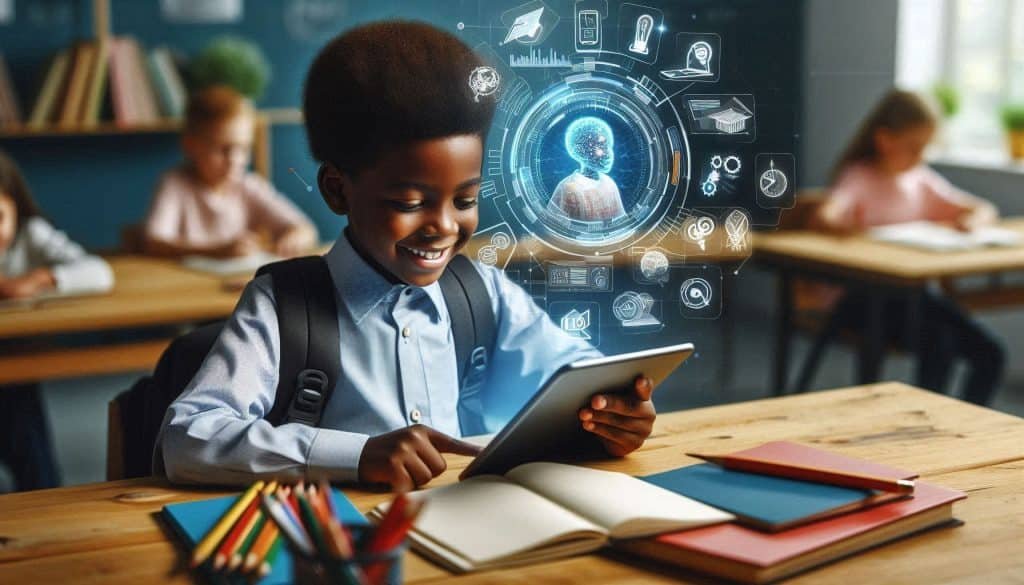
Artificial Intelligence (AI) has moved from science fiction to reality. Today, it’s becoming a regular part of classrooms and online learning. While AI started by handling tasks like grading and scheduling, its biggest impact now is helping students learn in more personalized ways. (Bhujade, 2025)
The Good and the Bad: What Research Shows
AI in education is not perfect. Studies show it can help students, but it also comes with real problems.
The Challenges:
- Rigid and Limiting: Some AI systems follow strict rules that don’t allow for creative thinking or exploration beyond set paths.
- Emotional Disconnect: Constantly interacting with a machine instead of a human teacher can feel isolating and impersonal.
- Repetitive and Stressful: When AI keeps testing and evaluating students, it can create pressure and make learning feel like a chore.
- Technical Problems: Glitches, crashes, and connectivity issues interrupt learning and cause frustration.
- Privacy Concerns: AI systems collect large amounts of student data, raising questions about how that information is stored and used.
- Dependence Risk: Students might rely too heavily on AI tools, weakening their ability to think independently or solve problems without assistance.
The Benefits:
Despite these issues, many students and teachers find AI helpful. AI tools can:
- Spark new ideas and offer different ways to solve problems
- Provide instant, personalized feedback tailored to each student
- Keep students engaged through interactive features and game-like elements
- Be available anytime, day or night, for extra support
- Help students feel more confident and less anxious about learning
Research shows that most educators and learners see AI as useful overall, even while recognizing its limitations. (Lin & Chen, 2024)
Real Results: AI Helping Students Who Struggle
One study focused on seventh-graders who had ongoing trouble with math. The researchers used an AI program designed specifically to help these students. The results were encouraging:
- Better math scores
- Less anxiety about math
- Improved thinking and learning strategies
- Greater ability to bounce back from setbacks
The AI system used advanced technology (a neural network) to understand each student’s struggles and provide targeted help. By addressing, the emotional side (anxiety) and the practical side (problem-solving skills), the tool helped students improve in meaningful ways. (Polydoros et al., 2025)
However, it’s important to note that this was one study with a specific group of students. We don’t yet know if these results would work the same way for all age groups, subjects, or types of learners.
The Bottom Line: Promise and Caution
AI shows real potential to support personalized learning and help students build confidence and skills. When designed well, these tools can make education more adaptive and responsive to individual needs.
However, we should move forward carefully. AI should complement—not replace—human teachers. The drawbacks are real: technical failures, emotional disconnect, over-reliance, and privacy risks need serious attention. More research is needed to understand how AI works across different classrooms, cultures, and learning styles.
As education continues to change, AI can be a valuable tool—but only if we use it thoughtfully and keep improving it based on what actually works for students.